
Concrete Nail Production Line
What is the concrete nail production line?
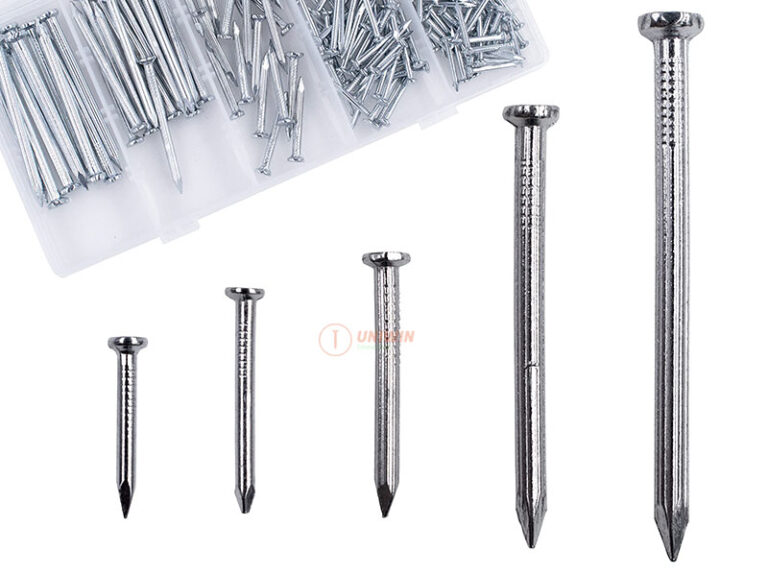
The production line for concrete nails involves multiple machines and a series of operations to manufacture high-quality, high-strength nails made of high-carbon steel wire. These nails have a straight, fluted, smooth shaft and a round, flat head. They are commonly used in construction and building applications, particularly concrete and masonry. This material is strong enough to penetrate hard surfaces and withstand the pressure of construction work. However, due to its smooth shank, it is not suitable for hanging things.
Main machines in manufacturing concrete nails
The production of concrete nails requires various types of machinery, each with a unique role. The following are the main machines involved:
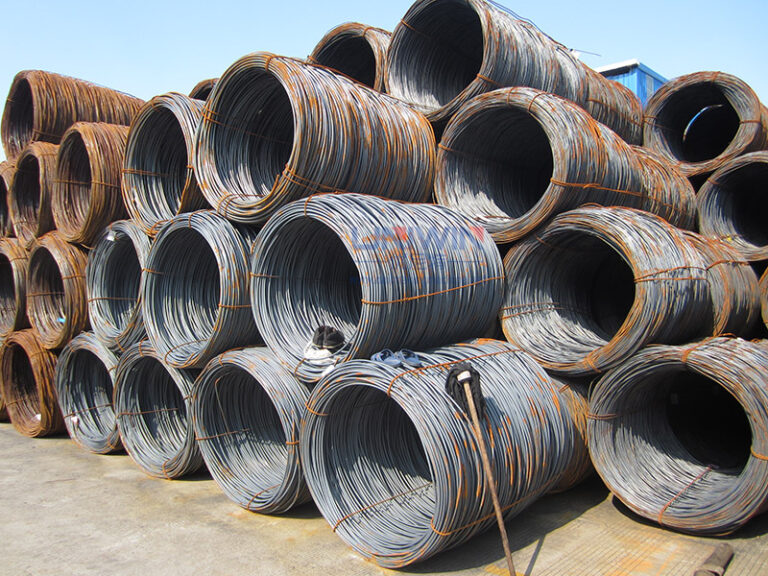
- Wire drawing machine: This machine is utilized to decrease the diameter of steel wire rods to the required size for manufacturing concrete nails.
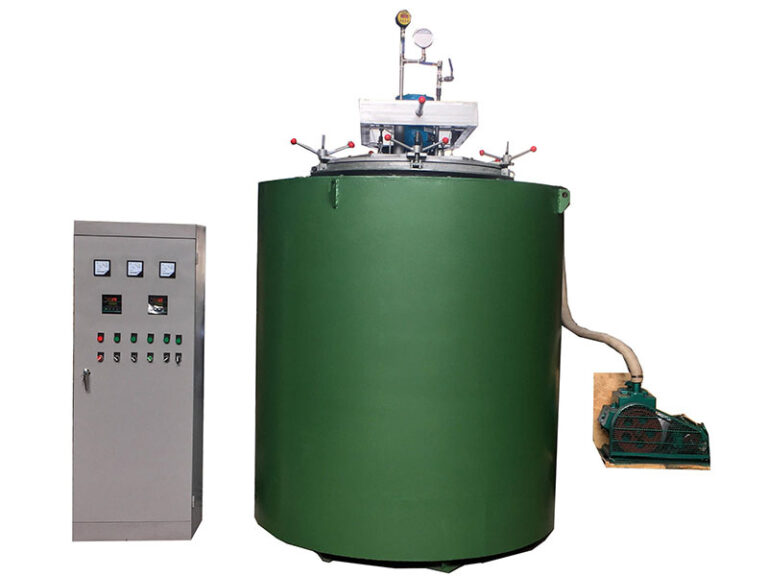
- Annealing furnace: The annealing furnace is used to reduce the hardness of the steel wire and improve its plasticity. This step prepares the wire for further drawing.
- Concrete nail making machine: The machine cuts the drawn wire and forms the nail head using a nail mold, pin punch, and nail cutter.
- Nail polishing machine: This machine is designed to remove burrs and imperfections from nails produced by the concrete nail making machine.
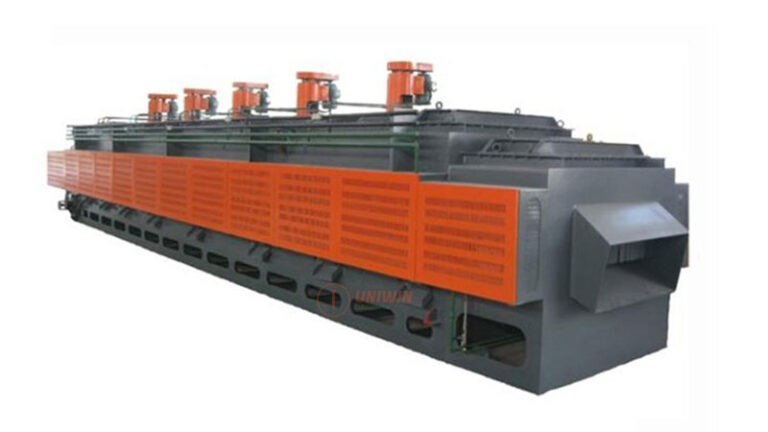
- Heat treatment furnace: The concrete nails are hardened and strengthened in a belt-type furnace through heat treatment. This process refines the nail’s microstructure and improves its mechanical properties.
- Galvanization equipment: The galvanization equipment applies a thin layer of zinc to concrete nails, increasing their lifespan by acting as a barrier against moisture and other corrosive elements.
How to produce concrete nails?
Manufacturing concrete nails involves eight steps: wire drawing, annealing, wire drawing again, concrete nail making, nail polishing, heat treatment, galvanization, and packaging.
Wire drawing
Manufacturing concrete nails begins with wire drawing using a wire drawing machine. The machine employs various drawing dies to reduce high carbon steel wire to a smaller diameter, typically 4.5mm or 4.0mm. The wire becomes hardened during the drawing process, making drawing difficult. Therefore, it needs to be annealed to soften it and make it easier to draw.
Annealing
After the wire drawing process, the steel wire must undergo annealing in a furnace to reduce its hardness and improve its plasticity. The wire is heated to an appropriate temperature, held for a specific duration, and then slowly cooled in the furnace. Annealing eliminates internal stress and works to harden the steel wire, preventing deformation and cracking. This process prepares the steel wire for further drawing.
Wire drawing again
Using a wire drawing machine, the steel wire is drawn again to achieve the desired diameter for creating concrete nails. This secondary wire drawing process, which occurs after annealing, minimizes deformation and cracks in the steel wire during subsequent processes.
Concrete nail making
After the wire drawing, the wire is fed into the concrete nail making machine. Using a nail cutter, the machine cuts the wire into nails and forms nail heads with a pin punch. The machine can be adjusted to produce nails of different lengths.
Nail polishing
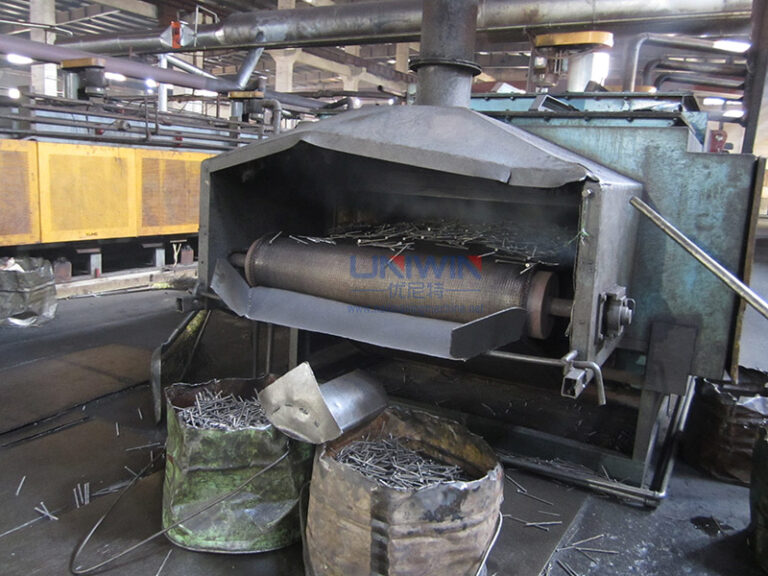
The concrete nails produced by the concrete nail making machine often have burrs and sharp edges. A nail polishing machine removes these imperfections and enhances their corrosion resistance. This machine utilizes sawdust, engine oil, and paraffin to create a smooth and bright surface on the nails.
Heat treatment
After polishing, nails often undergo heat treatment in a belt-type furnace to increase their hardness and strength. This process typically involves heating the nails to a high temperature and then rapidly cooling them. Heat treatment is a crucial process in mechanical manufacturing. Unlike other processing techniques, heat treatment does not typically alter the workpiece’s shape or overall chemical composition. It enhances the workpiece’s performance by altering its microstructure or modifying the chemical composition of its surface.
Galvanization
To improve the corrosion resistance of concrete nails, they can be coated with a thin layer of zinc using electro-galvanizing technology. This process increases their lifespan.
Packaging
Finally, concrete nails are packaged in cartons of varying sizes and weights to ensure proper storage and protection during transport to construction sites or retail stores. The cartons come in sizes of 1 kg, 5 kg, 20 kg, or 25 kg.
Quick-Wear Parts List of Wire Drawing Machine
| No. | Item | Life Time | Material/Model |
|---|---|---|---|
| 1 | Wire drawing die | 15-20 tons | Tungsten carbide |
Quick-Wear Parts List of Concrete Nail Making Machine
| No. | Item | Life Time | Material/Model |
|---|---|---|---|
| 1 | Nail cutter | 1-2 Months | Alloy/steel |
| 2 | Nail mould | 3 Months | Tungsten carbide/HSS |
| 3 | Pin punch | 6 Months | Tungsten carbide/HSS |