
Clout Nail Production Line
What is the clout nail production line?
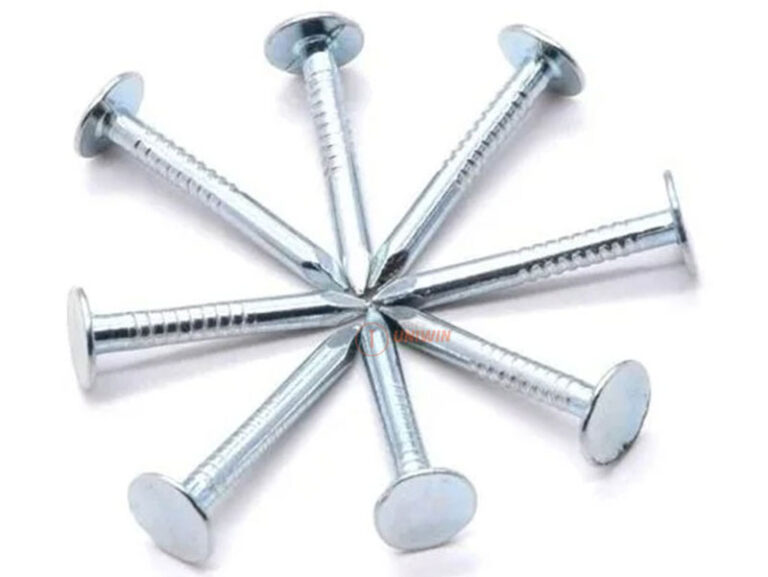
The clout nail production line is a process used to manufacture clout nails. This involves several stages and different types of machines to transform steel wire into finished nails, meeting the demand for high-quality, mass-produced clout nails. These nails are commonly used in construction, including crate construction, furniture repair, cabinet work, batten doors, and countertops. A short shank and a large, flat head characterize them. The purpose of the large head is to distribute force and prevent damage to materials while also providing a firm hold even in adverse weather conditions. The length of the shank may vary depending on the application but is typically around three centimeters. Nails may have smooth or ring shanks to increase their holding force.
Components of the Wire Nail Production Line?
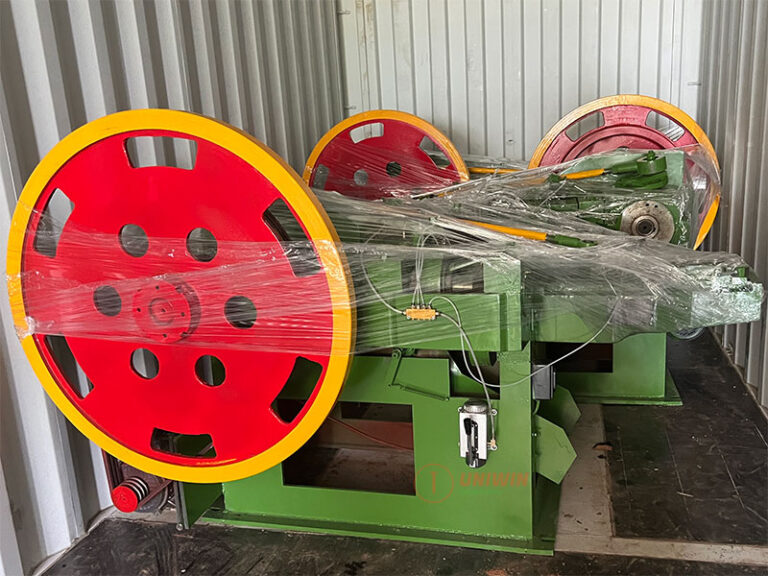
The production of clout nails involves three machines: a wire drawing machine, a clout nail making machine, and a polishing machine. The wire drawing machine reduces the diameter of steel wire to the desired size using different drawn dies. The nail making machine cuts the cold drawing wire into the set length, cuts the nail tip, and forms the nail head. Finally, the nail polishing machine polishes the clout nails with sawdust to make them smooth and bright.
How to manufacture clout nails?
Producing high-quality clout nails involves wire drawing, clout nail manufacturing, nail polishing, quality inspection, and packaging.
Wire drawing
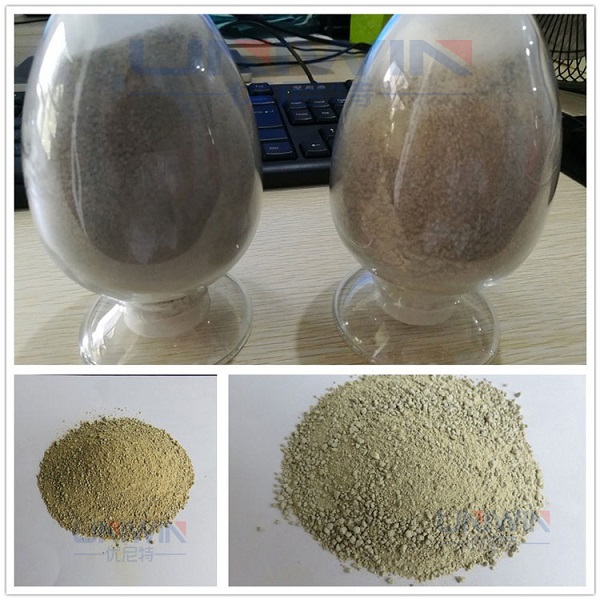
The wire drawing machine begins by drawing the raw material steel wire Q195 or Q235, with a diameter of 6.5mm, into smaller diameters of 2.5mm, 3.5mm, 3.7mm, and 4.5mm. The drawing process requires the use of a sharpening mill, drawing powder, and a butt welding machine. The steel wire is first coated with drawing powder to reduce friction between the wire and the drawing die, prolonging the die’s service life. The wire then passes through the drawing die.
Clout nail making
The wire is fed into the clout nail making machine, where it is cut into nails, and heads are formed. The machine can produce clout nails of different sizes by adjusting its settings. The machine’s working principle involves four stages: first, the wire is fed into the machine; second, the nail die holds the wire while the punch bar forms the nail head; third, the wire is fed forward by the feeding box. The nail cutter cuts the cold-drawn wire to the desired length and shapes the nail point. The finished clout nails are then collected in the designated box.
Nail polishing
Clout nails produced by the clout nail making machine have sharp edges and may have some residual oil or grease. The nail polishing machine is used to polish clout nails with sawdust, engine oil, paraffin, or other materials to remove burrs and make them shiny. Sawdust is used to remove sharp edges, engine oil is used to give a shiny surface, and paraffin increases rust resistance.
Quality Inspection
After polishing, the clout nails must undergo a quality inspection to remove any defective nails that are bent, lack a head, or have other quality issues. The inspection process may involve manual and machine inspections to ensure the nails meet the required specifications.
Packaging
After quality inspection, Clout nails are packaged in cartons of varying sizes and weights, including 1kg, 5kg, 20kg, or 25kg.
It is important to note that while different manufacturers may have slightly different processes, the basic principles remain the same.
Auxiliary equipment in the production of clout nails
In addition to the three main pieces of equipment, the following auxiliary devices also play a significant role.
- Sharpening mill: The purpose is to finely grind the raw steel wire tip before it enters the wire drawing machine.
- Butt welding machine: The butt welding machine ensures continuous operation of the wire drawing machine. In case of wire breakage during the drawing process, the butt welding machine is used to weld the two ends together.
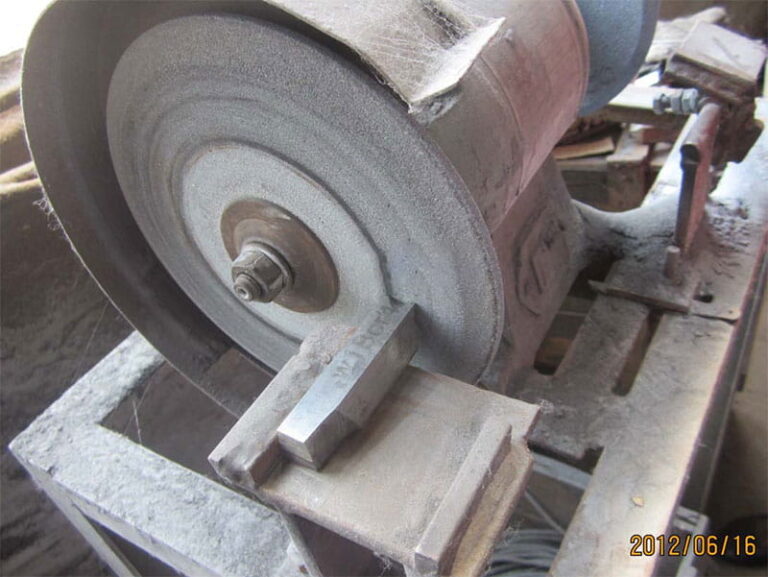
- Nail cutter grinder: The function of the nail cutter grinder is to sharpen the cutter when it becomes dull.
Quick-Wear Parts List of Wire Drawing Machine
| No. | Item | Life Time | Material/Model |
|---|---|---|---|
| 1 | Wire drawing die | 15-20 tons | Tungsten carbide |
Quick-Wear Parts List of Clout Nail Making Machine
| No. | Item | Life Time | Material/Model |
|---|---|---|---|
| 1 | Nail cutter | 1-2 Months | Alloy/steel |
| 2 | Nail mould | 3 Months | Tungsten carbide/HSS |
| 3 | Pin punch | 6 Months | Tungsten carbide/HSS |
To ensure efficient operation of the clout nail production line, it is critical to maintain these wearing parts. Paying attention to their running status will help maintain the quality of clout nails and keep the production line operating at optimum capacity.